Extreme Cleaning Services in Canada – 2026
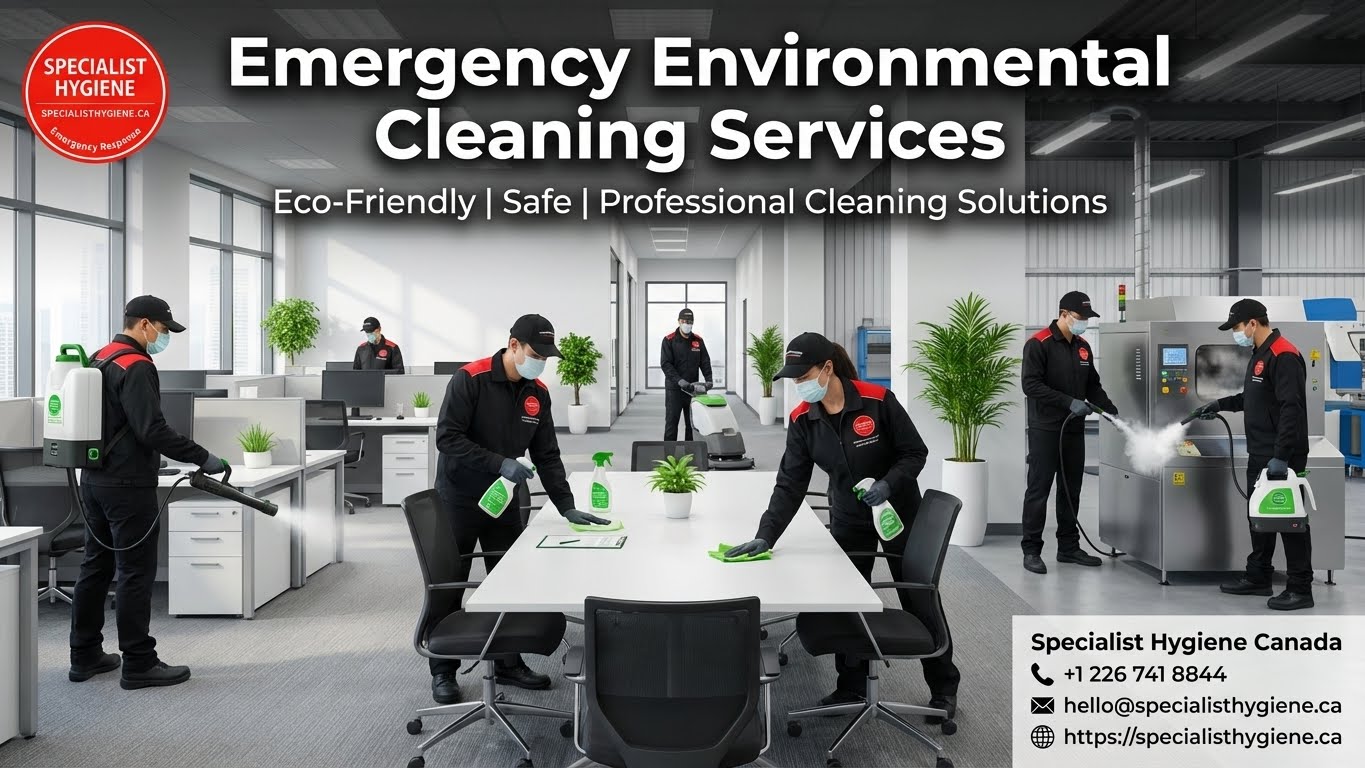
Introduction: Why “Extreme Cleaning” Has Become Essential in Canada
Extreme cleaning involves far more than removing visible dirt or clutter. It frequently includes exposure to hazardous substances, biological contaminants, structural risks, and unsafe environments created by neglect, trauma, pests, flooding, fire damage, or long-term hoarding. For this reason, a Safety First approach is not optional — it is a legal, ethical, and professional requirement under Canadian health and safety laws.
Call us now: +1 226 741 8844
Email: hello@specialisthygiene.ca
Safety First During Extreme Cleaning in Canada
Under the Canada Labour Code (Part II) and provincial Occupational Health and Safety Acts, employers have a legal duty to protect workers from foreseeable risks. In extreme cleaning environments, this means conducting a thorough risk assessment before any work begins. A qualified supervisor must identify hazards such as bloodborne pathogens, airborne viruses, mould spores, asbestos, sharps, vermin, chemical residues, unstable structures, confined spaces, and biohazardous waste. Work cannot proceed until risks are documented and appropriate controls are in place.
Personal Protective Equipment (PPE) is a core requirement under Canadian regulations. Workers must be provided with — and properly trained to use — protective suits, gloves, eye protection, respirators, and safety footwear appropriate to the level of contamination. For biohazard or sewage incidents, N95 or P100 respirators, liquid-resistant coveralls, and chemical-grade gloves are often mandatory. Employers must ensure PPE is fit-tested, maintained, and replaced as needed, in line with provincial standards such as Ontario Regulation 833 (Control of Exposure to Biological or Chemical Agents).
Training is equally critical. Canadian law requires that workers receive adequate instruction on workplace hazards, safe handling procedures, and emergency response. Extreme cleaning technicians must understand infection control, hazardous waste segregation, decontamination protocols, and safe use of chemicals. They must also be trained in WHMIS (Workplace Hazardous Materials Information System), ensuring they can read safety data sheets (SDS) and understand risks associated with disinfectants, solvents, and biocides.
Containment is another legal and safety priority. When cleaning contaminated spaces, barriers, negative air systems, and HEPA filtration are often required to prevent the spread of pathogens or toxic dust to other areas of a property. This aligns with Canadian best practices in environmental and occupational hygiene, which emphasise source control and isolation of hazards.
Waste management must comply with federal and provincial regulations. Biohazardous waste — including sharps, contaminated materials, and certain chemical residues — must be collected in approved containers, labelled correctly, and transported by licensed carriers to authorised disposal facilities. Improper disposal can result in significant legal penalties and environmental harm.
Worker wellbeing is also protected under Canadian law. Extreme cleaning can be physically and psychologically demanding, particularly in trauma or hoarding environments. Employers must ensure reasonable work hours, adequate breaks, hydration, and access to hygiene facilities. In high-risk scenarios, a minimum two-person team is often required to reduce fatigue and ensure mutual safety.
Finally, documentation and compliance are essential. Every extreme cleaning project should include a written risk assessment, safety plan, waste tracking records, and post-cleaning verification. This not only protects workers but also provides reassurance to property owners, insurers, and public health authorities that the job meets Canadian legal standards.
In Canada, Safety First in extreme cleaning is not just a slogan — it is a legal obligation, a professional duty, and the foundation of responsible remediation work that protects workers, clients, and communities alike.
Canada’s built environment is changing faster than at any other time in modern history.

Densification of cities, growth of high-rise living, increased rental stock, aging housing infrastructure, extreme weather events, and a post-pandemic awareness of hygiene have combined to create a rapidly expanding need for specialist extreme cleaning services across the country.
What was once seen as niche — confined to crime scenes or rare disasters — is now a mainstream necessity for homeowners, landlords, businesses, insurers, municipalities, and public-sector organisations.
Extreme cleaning is not regular janitorial work. It is a highly technical, risk-managed, and regulated discipline that deals with contamination that ordinary cleaners are neither trained nor legally permitted to handle.
At Specialist Hygiene Services, our mission is simple:
To make unsafe spaces safe again — quickly, discreetly, and professionally — wherever they occur in Canada.
With national presence and local coverage, we support clients from Vancouver to Halifax, from Thunder Bay to Windsor, and across every city, town, and village in Ontario.
Our work includes:
Infectious disease decontamination
Ozone air purification
Extreme hoarding cleanups
Pest infestation remediation
Hazardous waste management
This blog serves as the most comprehensive public guide to extreme cleaning services in Canada, written in Canadian English and tailored to real-world conditions across Ontario and beyond.
What Is Extreme Cleaning?

“Extreme cleaning” refers to any remediation scenario where contamination presents a health, structural, or legal risk to occupants, property owners, or the public.
Unlike standard cleaning, extreme cleaning:
Requires specialist PPE (Personal Protective Equipment)
Follows provincial and federal safety frameworks
Involves licensed hazardous waste transport
Uses hospital-grade disinfectants
Employs air treatment technologies such as ozone
Requires scientific decontamination methods
Often involves coordination with insurers, councils, landlords, and authorities
Typical environments requiring extreme cleaning include:
Hoarded properties
Crime scenes
Unattended deaths
Squatter-occupied buildings
Sewage overflows
Flood-damaged properties
Fire-damaged homes with smoke residue
Pest-infested houses
Nicotine-contaminated rentals
Industrial contamination sites
Public transport vehicles
Schools, care homes, and hospitals
Abandoned commercial units
Where standard cleaners focus on aesthetics, extreme cleaning focuses on safety, compliance, and long-term habitability.
Why Demand for Extreme Cleaning Is Rising in Canada

Several national trends are driving unprecedented demand for extreme cleaning services.
1) Housing Pressure and Rental Growth
Canada’s housing crisis has increased density, tenancy turnover, and property stress.
More rental properties mean:
More wear and tear
More tenant disputes
More abandonment cases
More squatter occupations
More neglected properties
More emergency remediation calls
Landlords increasingly rely on professional extreme cleaning rather than DIY solutions that fail to meet safety standards.
2) Post-Pandemic Hygiene Awareness
COVID-19 permanently shifted public expectations around cleanliness.
Businesses, schools, transit authorities, and care homes now expect:
Certified disinfection
Scientific sanitisation
Documented decontamination
Odour control verification
Air quality remediation
This has made services like antiviral sanitisation, ozone air treatment, and pathogen decontamination mainstream rather than optional.
3) Climate Change and Extreme Weather
Ontario and other provinces are experiencing more frequent:
Flooding
Storm damage
Sewer backflow incidents
Water ingress into basements
Mould outbreaks
These conditions require professional remediation beyond surface cleaning.
4) Aging Housing Stock
Many properties across Ontario and Canada are decades old.
Older homes are more likely to have:
Mould contamination
Pest infestations
Structural weaknesses
Hazardous materials
Hidden water damage
Bacterial growth
Extreme cleaning becomes essential to restore safety.
5) Growth in Squatter and Abandonment Cases
Across urban and semi-urban Canada, empty properties are increasingly occupied illegally.
These properties often require:
Human waste removal
Drug paraphernalia cleanup
Needle decontamination
Odour neutralisation
Deep sanitisation
Hazardous waste disposal
This is not a job for standard cleaners — it requires specialist biohazard teams.
Extreme Cleaning Across Ontario — A Provincial Overview

Ontario is Canada’s most populous province and has the most diverse cleaning challenges in the country.
Greater Toronto Area (GTA)
Cities such as Toronto, Mississauga, Brampton, Vaughan, Markham, and Oakville frequently require:
High-rise apartment decontamination
Hoarding remediation in condos
Tenant abandonment cleanups
Smoke-damaged unit restoration
Pest-infested apartment remediation
Post-squatter sanitisation
The density of buildings means contamination can spread quickly between units, making professional intervention critical.
Eastern Ontario
In cities like Ottawa, Kingston, and Belleville, common cases include:
Rural hoarding properties
Farm building contamination
Flood-damaged basements
Mould remediation
Abandoned cottage cleanups
These require mobile teams capable of reaching remote locations.
Southwestern Ontario
In Windsor, London, and Niagara, we often handle:
Industrial site contamination
Manufacturing facility decontamination
Commercial kitchen biohazard cleaning
Waste spill remediation
Post-fire smoke residue removal
Northern Ontario
In Thunder Bay, Sudbury, and Timmins, extreme cleaning cases often involve:
Isolated properties
Severe neglect
Long-term abandonment
Mould contamination
Rodent infestation
Hazardous waste removal
This region highlights the importance of national presence with local response.
Core Services Within Extreme Cleaning
1) Biohazard Cleaning
This involves the removal of:
Blood
Bodily fluids
Infectious materials
Human waste
Sharps and needles
Medical contamination
Common in:
Crime scenes
Unattended deaths
Hospital incidents
Public transport accidents
Care homes
2) Disinfection and Sanitisation
Specialist teams use hospital-grade chemicals to eliminate:
Bacteria
Viruses
Mould spores
Airborne pathogens
Surface contaminants
This is critical in:
Schools
Offices
Hotels
Public transport
Care facilities
3) Ozone Air Treatment
Ozone is used to:
Neutralise deep odours
Kill airborne bacteria
Remove smoke smell
Treat nicotine contamination
Purify enclosed spaces
This is commonly used after:
Fires
Smoking tenancy cases
Flood damage
Animal hoarding situations
4) Odour Deodorisation
Extreme odours can make properties uninhabitable.
Specialist techniques include:
Ozone treatment
Chemical neutralisers
Deep surface sanitisation
Air filtration
Typical scenarios include:
Decomposing food
Animal waste
Sewage backups
Cigarette smoke residue
5) Waste Removal Services
This includes removal of:
Hazardous waste
Contaminated furniture
Biohazard materials
Flood-damaged items
Pest-infested belongings
All waste is handled legally and responsibly.
6) Pest Infestation Cleanup
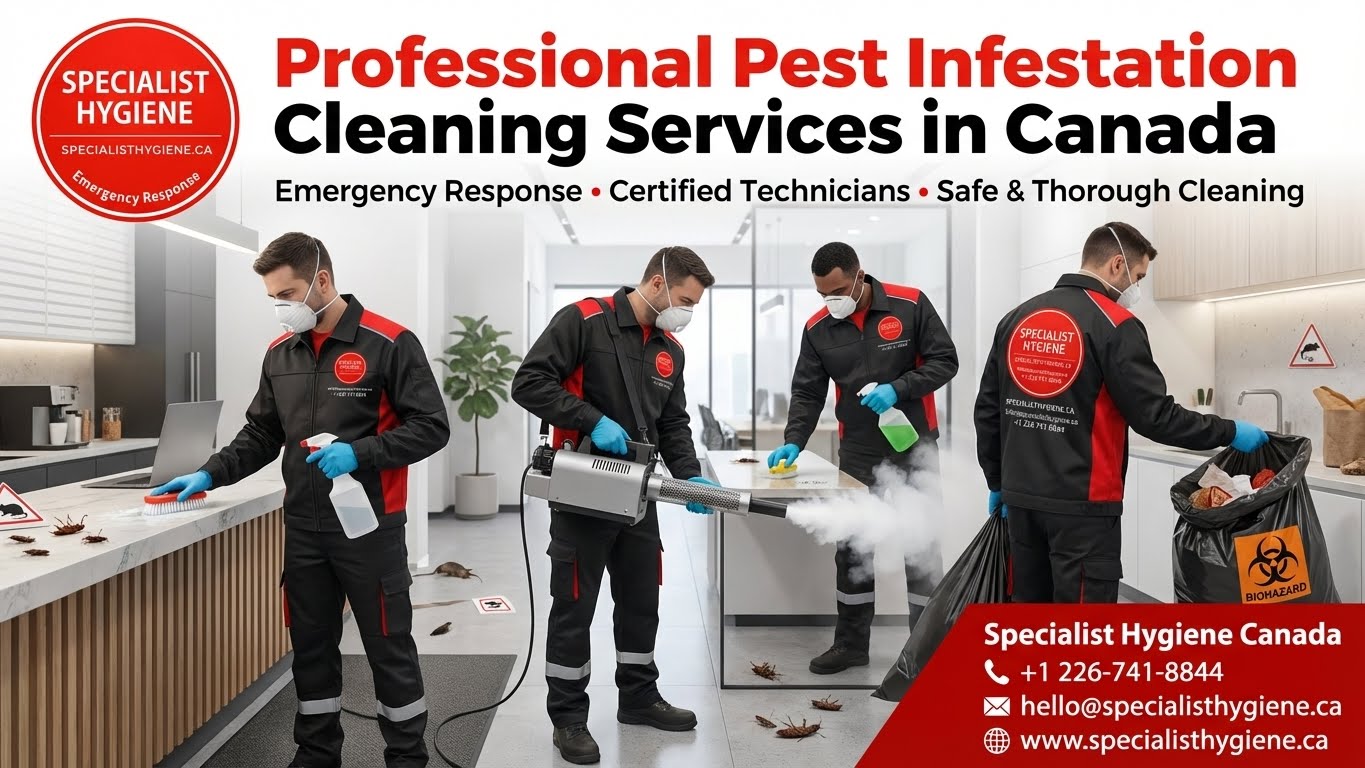
After an infestation of rats, mice, cockroaches, or bedbugs, properties require:
Deep sanitisation
Droppings removal
Bacteria elimination
Odour treatment
Structural cleaning
7) Squatter Property Decontamination
Squatter properties often contain:
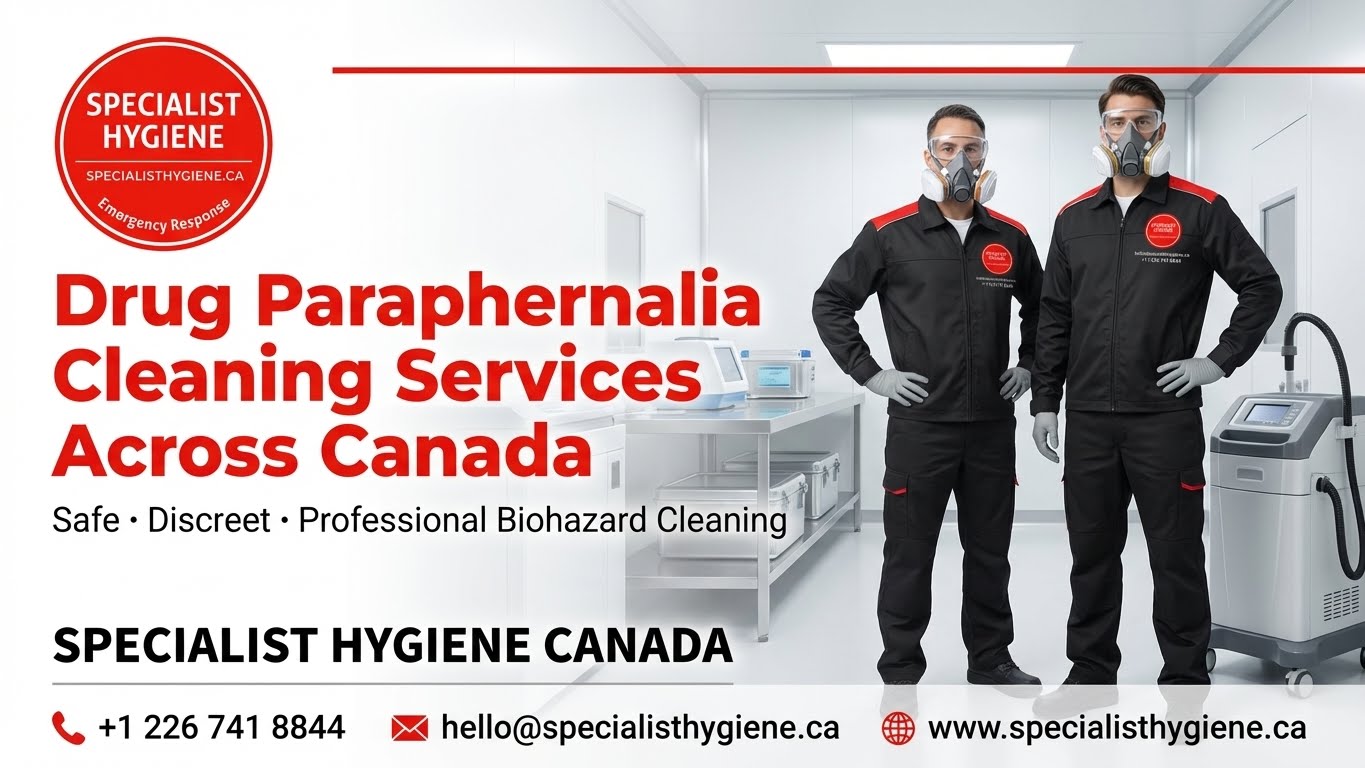
Human waste
Drug paraphernalia
Needles
Broken glass
Rotting food
Mould growth
These require specialist biohazard remediation.
8) Nicotine-Contaminated Properties
Nicotine residue penetrates walls, ceilings, and carpets.
Specialist remediation involves:
Chemical treatment
Ozone air purification
Deep surface cleaning
Paint preparation
Odour neutralisation
Why DIY Cleaning Is Dangerous
Many property owners attempt to clean extreme contamination themselves.
This is risky because:
They lack PPE
They don’t understand pathogens
They may spread contamination
They risk exposure to harmful bacteria
They may violate waste disposal laws
They can make odour problems worse
Professional teams exist for a reason.
Specialist Hygiene Services — Canada-Wide Leadership
At Specialist Hygiene Services, we combine:
24/7 response
Certified technicians
Advanced decontamination technology
Licensed waste transport
Discreet service
Compassionate approach
We work with:
Homeowners
Landlords
Insurers
Councils
Property managers
Hospitals
Schools
Businesses
Our commitment is to restore safety, dignity, and habitability.
What Happens During an Extreme Cleaning Job? (Overview)
Initial Assessment
Risk Evaluation
Containment Setup
Hazard Removal
Deep Decontamination
Air Treatment (if needed)
Final Sanitisation
Waste Disposal
Property Handover
Extreme Cleaning in Ontario — A Province Under Pressure
Ontario is the economic, cultural, and demographic engine of Canada. It is also the province where extreme cleaning demand is highest.
With more than 14 million residents, rapidly growing urban centres, aging housing stock, increasing rental density, and diverse industrial activity, Ontario presents some of the most complex contamination challenges in the country.
Extreme cleaning here is not simply about “cleaning mess.” It is about restoring safety, public health, compliance, and dignity in environments that have often deteriorated far beyond what conventional cleaners can manage.
At Specialist Hygiene Services, we operate across every corner of Ontario — from the busiest urban high-rises in Toronto to remote rural properties in Northern Ontario.
Our approach combines:
Local knowledge
National capacity
Scientific decontamination
Compassionate service
Regulatory compliance
Insurance alignment
Rapid emergency response
This section explains how extreme cleaning varies across Ontario’s regions, property types, and risk profiles — and why specialist remediation is essential.
Greater Toronto Area (GTA): High-Density Extreme Cleaning
The GTA is Canada’s most densely populated region and the most demanding environment for extreme cleaning services.
Cities such as Toronto, Mississauga, Brampton, Vaughan, Markham, Oakville, Richmond Hill, and Pickering regularly require specialist remediation due to:
High-rise living
Frequent tenancy turnover
Aging apartment blocks
Growing social housing needs
Rising squatter incidents
Pest outbreaks
Mould from water leaks
Fire and smoke contamination
Nicotine-damaged rentals
Extreme Cleaning in High-Rise Apartments
High-rise contamination spreads quickly.
A single biohazard incident — such as sewage overflow, rodent infestation, or unattended death — can affect:
Adjacent apartments
Shared corridors
Elevators
Waste chutes
Common areas
Air circulation systems
This is why standard cleaning is insufficient.
Specialist Hygiene Services uses:
Containment barriers
Negative air pressure systems
HEPA filtration
Ozone treatment
Hospital-grade disinfectants
These methods prevent cross-contamination and protect other residents.
Hoarding in GTA Condos and Flats
Hoarding cases in the GTA are increasingly common, especially in:
Older apartment buildings
Rent-controlled units
Social housing complexes
Common risks include:
Blocked exits
Fire hazards
Pest infestation
Mould growth
Structural strain
Neighbour complaints
Our hoarding remediation process involves:
Respectful client engagement
Room-by-room sorting
Recovery of sentimental items
Safe disposal of contaminated materials
Deep sanitisation
Odour removal
Final property reset
This ensures compliance with building safety rules and protects vulnerable occupants.
Nicotine Contamination in Rental Properties
In Toronto and surrounding cities, many landlords face nicotine contamination after long-term smoking tenancies.
Nicotine residue penetrates:
Walls
Ceilings
Carpets
Curtains
Furniture
Air ducts
Standard repainting does not remove nicotine odour — it often traps it inside.
We use:
Chemical degreasers
Ozone air treatment
Deep surface decontamination
Targeted odour neutralisation
This restores air quality and property value.
Eastern Ontario: Rural, Semi-Rural, and Small Town Challenges
Eastern Ontario includes cities such as Ottawa, Kingston, Belleville, Brockville, and Cornwall, along with many rural communities.
Here, extreme cleaning often involves:
Abandoned farm properties
Flood-damaged basements
Mould remediation
Rodent infestation
Long-term neglect
Squatter contamination
Rural Hoarding Cases
In rural areas, hoarding properties are often larger and more isolated, which means contamination can become severe before intervention.
Common findings include:
Animal hoarding
Contaminated barns
Rotting food storage
Rodent nests
Structural decay
Biohazard waste
Specialist teams must travel long distances, set up mobile decontamination units, and coordinate waste transport legally.
Flood and Sewage Contamination
Eastern Ontario experiences periodic flooding that leads to:
Basement sewage backups
Bacterial contamination
Black mould growth
Structural water damage
Our response includes:
Water extraction
Anti-microbial treatment
Mould removal
Air purification
Preventive remediation
This prevents long-term health risks.
Southwestern Ontario: Industrial and Commercial Risks
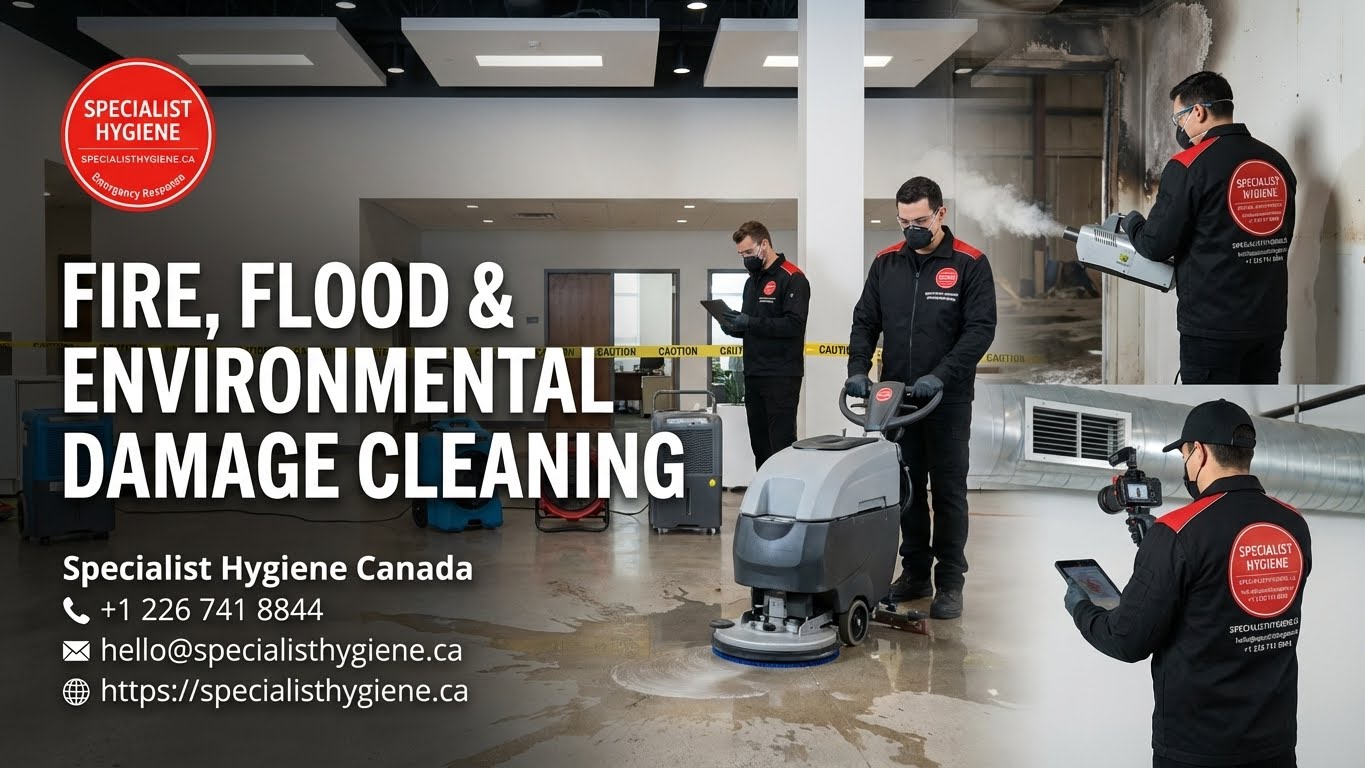
Southwestern Ontario — including Windsor, London, Kitchener, Waterloo, Guelph, and Niagara — has a strong industrial and manufacturing base.
Extreme cleaning cases here often involve:
Factory contamination
Warehouse biohazards
Commercial kitchen sanitation failures
Chemical spills
Fire-damaged industrial units
Pest outbreaks in storage facilities
Industrial Decontamination
Factories and warehouses can accumulate:
Oil residues
Biological waste
Chemical spills
Mould from humidity
Pest contamination
We deploy specialist teams with:
Industrial PPE
High-powered disinfectants
Heavy-duty extraction equipment
Licensed hazardous waste removal
Post-Fire Smoke and Soot Cleaning
Fire damage leaves behind:
Toxic smoke residue
Persistent odours
Structural contamination
Ozone air treatment is essential to neutralise deep-set odours and restore safe indoor air quality.
Northern Ontario: Remote and Severe Cases
Northern Ontario — including Thunder Bay, Sudbury, Timmins, North Bay, and Sault Ste. Marie — presents unique challenges.
Properties are often:
Older
Isolated
Poorly maintained
Exposed to extreme weather
Common extreme cleaning cases include:
Severe hoarding
Long-term abandonment
Mould infestation
Rodent contamination
Illegal squatting
Remote Biohazard Response
Because of distance, teams must be fully self-sufficient, bringing:
Water supplies
Power generators
Mobile decontamination units
Waste transport systems
This ensures professional remediation even in isolated locations.
Types of Extreme Cleaning Across Ontario
1) Biohazard and Trauma Cleaning
Required after:
Unattended deaths
Medical incidents
Accidents
Crime scenes
This involves safe removal of:
Blood
Bodily fluids
Sharps
Infectious materials
2) Pest Infestation Remediation
After extermination, properties often still contain:
Droppings
Urine contamination
Bacteria
Strong odours
We perform deep sanitisation and air treatment to restore habitability.
3) Squatter Property Decontamination
Common in:
Vacant commercial units
Abandoned homes
Derelict buildings
Typical contamination includes:
Human waste
Drug paraphernalia
Needles
Rotting food
Mould growth
4) Hoarding Cleanup
Covers:
Decluttering
Waste removal
Item recovery
Room reset
Biohazard cleaning
Odour control
5) Nicotine and Odour Removal
Uses:
Ozone air treatment
Surface decontamination
Deep cleaning of walls, ceilings, and carpets
Why Specialist Hygiene Services Leads in Ontario
Our Ontario operations are built on:
24/7 emergency response
Trained technicians
Licensed waste disposal
Hospital-grade chemicals
Ozone air technology
Compassionate approach
We work with:
Homeowners
Landlords
Property managers
Insurers
Councils
Hospitals
Schools
Police services
Local Coverage — City by City Snapshot
Toronto
High-rise biohazard cleaning, pest remediation, nicotine decontamination.
Mississauga
Commercial decontamination and industrial waste cleanup.
Brampton
Hoarding remediation and tenant abandonment cases.
Ottawa
Flood damage restoration and mould remediation.
Kingston
Rural property decontamination and pest cleanup.
London
Post-fire smoke cleaning and industrial sanitisation.
Windsor
Warehouse biohazard remediation.
Thunder Bay
Remote hoarding and abandoned property cleanup.
Sudbury
Mould remediation in aging homes.
The Ontario Regulatory Landscape
All extreme cleaning must comply with:
Ontario Ministry of Labour safety rules
Waste transport licensing
Public health guidelines
Biohazard disposal regulations
Specialist Hygiene Services ensures full compliance at every stage.
Advanced Technology in Extreme Cleaning
Extreme cleaning is no longer a manual process of scrubbing surfaces. It is a scientific discipline that blends microbiology, environmental engineering, industrial cleaning technology, and public health best practices.
At Specialist Hygiene Services, we operate at the highest professional standard across Canada — with specialist equipment, trained technicians, and regulated waste management systems that meet or exceed provincial and federal guidelines.
Our methodology is built on four core pillars:
Containment and Control
Mechanical Removal of Contaminants
Chemical Decontamination
Air Purification and Odour Neutralisation
This combination ensures that contamination is not merely hidden or masked — it is fully eliminated.
1) Containment and Isolation Systems
Before any cleaning begins, contaminated areas must be fully contained.
This is especially critical in:
Apartment buildings
Schools
Hospitals
Hotels
Offices
High-rise condominiums
Industrial facilities
We use professional containment barriers that prevent airborne pathogens, mould spores, or biohazard particles from spreading to unaffected areas.
Negative Air Pressure Systems
Negative air pressure machines create a controlled airflow that pulls contaminated air into HEPA filtration units rather than allowing it to circulate freely.
This technology is standard in medical environments and is essential in:
Biohazard cleanup
Mould remediation
Sewage contamination
Pest infestation cleanup
Trauma cleaning
Without negative pressure, contaminants can travel through ventilation systems, hallways, or adjacent rooms — creating wider health risks.
2) Mechanical Removal of Contaminants
Some materials cannot simply be cleaned — they must be physically removed.
This includes:
Severely mould-damaged drywall
Waterlogged carpets
Sewage-soaked insulation
Pest-infested furniture
Biohazard-contaminated soft furnishings
Specialist Hygiene Services follows strict waste segregation procedures:
Hazardous waste
Biohazard waste
General waste
Recyclable materials
Salvageable items
This structured approach ensures both environmental responsibility and regulatory compliance.
3) Chemical Decontamination and Disinfection
Once physical contaminants are removed, surfaces must be disinfected using professional-grade agents.
We do not use household cleaning products.
Instead, we deploy hospital-grade disinfectants that are effective against:
Bacteria
Viruses
Fungi
Mould spores
Bloodborne pathogens
Airborne viruses
Drug residue contamination
These chemicals are applied using controlled spraying systems that ensure full surface coverage without over-saturation or chemical damage.
4) Ozone Air Purification and Odour Neutralisation
One of the most powerful tools in extreme cleaning is ozone air treatment.
Ozone (O₃) is a naturally occurring gas that neutralises odours and destroys harmful microorganisms at a molecular level.
It is particularly effective for:
Cigarette smoke contamination
Pet odours
Sewage smells
Rotting food smells
Decomposition odours
Mould-related musty air
Ozone treatment is often the final stage of remediation — restoring clean, breathable air to the property.
Compliance and Legal Framework in Canada
Extreme cleaning is governed by strict regulations in Canada — especially when biohazards, infectious waste, or hazardous materials are involved.
Specialist Hygiene Services operates in full compliance with:
Ontario Ministry of Labour standards
Canadian Environmental Protection Act (CEPA)
Public Health Agency of Canada (PHAC) guidelines
Local municipal waste disposal rules
Transportation of Dangerous Goods (TDG) regulations
Every biohazard waste removal is documented, tracked, and disposed of through licensed facilities.
This protects:
Property owners
Tenants
Workers
The general public
It also ensures that insurance claims are legally sound and professionally supported.
Licensed Waste Removal Services
Extreme cleaning often generates hazardous waste that cannot be placed in regular landfill systems.
This includes:
Biohazard materials
Sewage-contaminated items
Needle waste
Animal carcasses
Mould-infested materials
Blood-soaked fabrics
We provide end-to-end waste management:
Safe collection
Secure transport
Licensed disposal
Official documentation
This is particularly important for:
Landlords
Insurance companies
Municipal councils
Property managers
Specialist Biohazard Cleaning Services
Biohazard cleaning is one of the most sensitive areas of extreme cleaning.
It is required after:
Death incidents
Medical emergencies
Crime scenes
Suicide cases
Industrial accidents
Severe illness events
Technicians wear full PPE including:
Respirators
Protective suits
Gloves
Face shields
Every surface is meticulously decontaminated to eliminate pathogens and health risks.
Pest Infestation Cleanup
Even after extermination, pest infestations leave behind dangerous biological contamination.
Common residues include:
Rodent droppings
Urine stains
Bacteria
Parasites
Nesting materials
We perform:
Deep surface cleaning
Antimicrobial treatment
Odour neutralisation
Air purification
This ensures the property is safe for human habitation again.
Squatter Contamination Remediation
Squatter properties are among the most extreme cleaning cases in Canada.
Common findings include:
Human waste
Drug paraphernalia
Needles
Rotting food
Mould growth
Fire hazards
These sites require careful biohazard protocols, legal waste handling, and extensive sanitisation.
Nicotine and Smoke Damage Cleaning
Cigarette smoke penetrates deep into building materials including:
Walls
Ceilings
Carpets
Upholstery
Air ducts
Standard painting or deodorising does not remove nicotine contamination.
We use:
Chemical residue removal
Ozone treatment
Deep surface cleaning
This restores both air quality and property condition.
Mould Remediation Framework
Mould is a major public health concern across Ontario, particularly in:
Basements
Bathrooms
Older homes
Flood-prone areas
Our process includes:
Containment
Moisture control
Removal of affected materials
Antimicrobial treatment
Air purification
This prevents regrowth and long-term damage.
Emergency Response System
Specialist Hygiene Services operates a 24/7 rapid response model across Canada.
We prioritise:
Hospitals
Care homes
Schools
Hotels
Public transport hubs
Industrial sites
Our teams can be deployed within hours — minimising disruption and risk.
Risk Mitigation for Property Owners
Extreme contamination can lead to:
Legal liability
Insurance disputes
Health violations
Structural damage
By using professional services, property owners protect themselves from:
Lawsuits
Fines
Eviction disputes
Health and safety breaches
Training and Expertise of Technicians
All technicians are trained in:
Biohazard handling
Infection control
Waste disposal regulations
Use of specialist equipment
Compassionate client communication
This ensures both technical excellence and human sensitivity.
Why DIY Cleaning Fails in Extreme Cases
Attempting extreme cleaning without professional support can result in:
Worsened contamination
Health risks
Spread of pathogens
Structural damage
Insurance rejection
Professional remediation is not optional — it is essential.
National Presence, Local Expertise
Although Specialist Hygiene Services operates nationwide, our teams are deeply familiar with local challenges in:
Ontario
British Columbia
Alberta
Quebec
Atlantic Canada
This combination of national capability and local knowledge sets us apart.
Technology-Driven, Human-Centred Cleaning
While we rely on advanced technology, our approach is fundamentally human.
We treat every client with:
Respect
Discretion
Empathy
Professionalism
We understand that extreme cleaning often follows trauma, loss, or crisis.
Case Study 1 — Severe Hoarding in Toronto (High-Rise Apartment)
Location: Scarborough, Toronto, Ontario
Property Type: 2-bedroom council flat
Issue: Extreme hoarding with rodent infestation, mould growth, and blocked exits
When Specialist Hygiene Services was contacted, the tenant had lived in the property for over 20 years. Layers of accumulated belongings filled every room, making movement almost impossible. Fire doors were obstructed, windows were inaccessible, and vermin had caused structural and sanitary damage.
What we did:
Full site risk assessment
Pest contamination containment
Room-by-room decluttering with client consent
Recovery of sentimental items
Biohazard decontamination
Ozone air purification
Deep sanitisation of walls, ceilings, and flooring
Licensed waste removal
Outcome:
The property was restored to a safe, habitable condition. The tenant remained housed, and the council avoided eviction proceedings. The insurer accepted full remediation costs due to documented professional intervention.
Case Study 2 — Squatter Decontamination in Mississauga Warehouse
Location: Mississauga, Ontario
Property Type: Vacant commercial warehouse
A commercial landlord discovered squatters had occupied a vacant warehouse for several months. The site contained human waste, discarded needles, rotting food, and severe mould.
What we did:
Police-coordinated access
Biohazard containment setup
Removal of hazardous waste
Antiviral sanitisation
Ozone deodorisation
Mould remediation
Deep clean and structural wipe-down
Outcome:
The property was legally cleared, decontaminated, and prepared for resale. The landlord avoided major liability claims.
Case Study 3 — Nicotine Contamination in Ottawa Rental Property
Location: Ottawa, Ontario
Property Type: Private rental house
A long-term smoker had lived in the property for 15 years. Walls were yellowed, carpets were stained, and air quality was hazardous.
What we did:
Chemical nicotine stripping
Deep carpet extraction
Ozone air treatment
Full wall and ceiling decontamination
Outcome:
Odours were permanently eliminated. The landlord re-let the property at full market value.
Case Study 4 — Sewage Flood in London, Ontario Basement
Location: London, Ontario
Issue: Raw sewage backup after heavy rainfall
Our response:
Immediate water extraction
Anti-bacterial treatment
Removal of contaminated materials
Air purification
Mould prevention treatment
Outcome:
Long-term mould damage was prevented and the homeowner avoided costly structural repairs.
Frequently Asked Questions (SEO-Friendly, Unique, Practical)
1. How quickly can you respond in Ontario?
We operate 24/7 with rapid response across all Ontario cities, towns, and villages — typically within hours.
2. Do you work with insurers?
Yes. We provide full documentation, reports, and photographic evidence to support claims.
3. Can you recover sentimental items?
Absolutely. We carefully identify, clean, and preserve valuables whenever possible.
4. What happens to hazardous waste?
All waste is transported by licensed carriers to approved disposal facilities.
5. Is your process safe for families and pets?
Yes. We use controlled chemicals and ensure properties are safe before handover.
6. Do you handle pest contamination?
Yes. We remediate droppings, bacteria, and odours after extermination.
7. Can you work overnight?
Yes — particularly for commercial sites to minimise disruption.
8. Do you cover rural Ontario?
Yes — including remote communities in Northern Ontario.
9. Will you coordinate with councils or housing associations?
Yes — we regularly work alongside local authorities.
10. Do you provide odour removal?
Yes — including ozone treatment for deep-set odours.
Why Specialist Hygiene Services is Canada’s Trusted Choice
You are not just hiring cleaners. You are engaging public health specialists.
We bring:
National coverage
Local expertise
Licensed waste management
Advanced decontamination technology
Compassionate client care
Insurance-aligned reporting
Regulatory compliance
Our Core Services (Summary for Readers & SEO)
Extreme cleaning
Biohazard remediation
Hoarding clearance
Squatter cleanup
Pest contamination remediation
Mould removal
Nicotine decontamination
Sewage cleanup
Odour neutralisation
Ozone air treatment
Waste removal services
National Presence — Local Coverage
We serve:
All of Ontario
British Columbia
Alberta
Quebec
Atlantic Canada
Prairie provinces
Northern territories
Wherever contamination exists, we respond.
Extreme Cleaning Services Checklist — Canada.
A. PRE-ARRIVAL & SITE PREPARATION
1) Client & Property Intake
☐ Confirm property address and access arrangements
☐ Identify property type (residential / commercial / industrial / public sector)
☐ Identify occupancy status (occupied, vacant, squatted, condemned, void)
☐ Confirm presence of vulnerable persons (elderly, children, pets)
☐ Collect insurance details (if applicable)
☐ Record emergency contacts (owner, landlord, council, social worker)
2) Risk & Compliance Planning
☐ Preliminary risk assessment completed
☐ Identify hazards (biohazard, asbestos risk, mould, pests, sharps, sewage)
☐ COSHH-equivalent safety plan prepared (Canada: WHMIS alignment)
☐ Waste classification determined (hazardous vs non-hazardous)
☐ Disposal route pre-approved with licensed carrier
☐ Permit requirements checked (municipal / provincial where needed)
B. ON-SITE SAFETY & CONTAINMENT
3) Site Setup
☐ Warning signage installed
☐ Exclusion zone established
☐ Containment barriers erected (plastic sheeting, negative air where needed)
☐ PPE issued (Tyvek suits, gloves, masks, respirators, eye protection)
☐ Safe entry/exit protocol in place
☐ Ventilation arranged (fans/HEPA filtration)
4) Utility Checks
☐ Running water available
☐ Electricity confirmed
☐ Safe waste-water disposal route identified
☐ Lighting adequate for safe work
☐ Fire safety risks controlled
C. CLEARANCE & REMOVAL PHASE
5) Initial Removal
☐ Removal of visible hazardous materials
☐ Bagging of contaminated items
☐ Segregation:
☐ Keep
☐ Donate
☐ Recycle
☐ Hazardous disposal
☐ Sharps/needles placed in approved containers
☐ Bulk waste removed systematically
6) Pest-Related Contamination
☐ Remove droppings, nests, carcasses
☐ Treat bacterial contamination
☐ Seal potential re-entry points
☐ Coordinate with pest control where required
D. DECONTAMINATION & DEEP CLEANING
7) Biohazard Cleaning
☐ Blood spill remediation
☐ Bodily fluids removal
☐ Sewage contamination treatment
☐ Antiviral disinfection
☐ Bacterial sanitisation
☐ High-touch surface disinfection (handles, switches, rails)
8) Structural Cleaning
☐ Walls cleaned and treated
☐ Ceilings decontaminated
☐ Flooring deep cleaned or removed
☐ Carpets extracted or replaced
☐ Skirting boards treated
☐ Ventilation ducts assessed
9) Mould & Air Quality
☐ Visible mould removed
☐ Moisture sources identified and controlled
☐ HEPA air scrubbing deployed
☐ Ozone treatment applied where odours persist
☐ Post-clean air quality check
10) Odour Control
☐ Source of odour identified
☐ Enzyme treatment applied
☐ Ozone air purification completed
☐ Final smell assessment conducted
E. WASTE MANAGEMENT & COMPLIANCE
11) Waste Handling
☐ Hazardous waste segregated
☐ Licensed waste carrier booked
☐ Waste tracking documentation completed
☐ Proof of disposal retained
☐ Non-hazardous waste recycled where possible
F. SPECIALIST CASES
12) Hoarding Cases
☐ Client consent obtained for sorting
☐ Sentimental items recovered
☐ Room-by-room clearance completed
☐ Psychological sensitivity maintained
☐ Family/social worker liaison documented
13) Squatter Cleanup
☐ Police coordination if required
☐ Needle & drug paraphernalia removed
☐ Human waste decontaminated
☐ Property secured after cleanup
14) Nicotine & Smoke Contamination
☐ Walls chemically stripped
☐ Carpets treated or replaced
☐ Ozone air treatment applied
☐ Residual odour testing completed
15) Flood/Sewage Incidents
☐ Standing water extracted
☐ Contaminated materials removed
☐ Antimicrobial treatment applied
☐ Mould prevention protocol activated
G. FINAL HANDOVER
16) Quality Assurance
☐ Final deep clean completed
☐ Visual inspection passed
☐ Air quality acceptable
☐ Odours eliminated
☐ All hazardous materials removed
17) Documentation
☐ Before-and-after photos compiled
☐ Waste transfer notes provided
☐ Written report issued to client/insurer
☐ Invoice prepared with scope of works
18) Client Sign-Off
☐ Walkthrough completed
☐ Client questions answered
☐ Keys returned / access restored
☐ Follow-up arranged if needed
H. SERVICES COVERED BY THIS CHECKLIST
This checklist supports:
Extreme cleaning
Biohazard cleaning
Hoarding clearance
Pest contamination remediation
Squatter cleanup
Mould removal
Sewage decontamination
Nicotine decontamination
Odour neutralisation
Ozone air cleanup
Licensed waste removal
Deep sanitisation & disinfection
Extreme Cleaning Services Prices in Canada.
📍 All figures are Canadian dollars (CAD)
1️⃣ Biohazard Cleanup
Biohazard jobs include unattended death scenes, trauma cleanup, blood/fluids removal, and regulated pathogen decontamination.
| Service | Typical Price Range | Notes |
|---|---|---|
| Small residential biohazard cleanup | $450 – $1,200 | Minor contamination (single room) |
| Medium biohazard cleanup | $1,200 – $3,000 | Multi-room, moderate contamination |
| Severe contamination (trauma/death) | $3,000 – $8,000+ | Includes containment & PPE |
| Complex cases with sharps/needles | $5,000 – $12,000+ | Requires specialist waste handling |
🧪 Factors: Volume of contamination, number of technicians, PPE needs, time on site, waste disposal volume.
2️⃣ Hoarding Clearance & Deep Decontamination
Hoarding jobs are highly variable based on clutter volume, structural issues, and presence of biohazards.
| Service | Typical Price Range | Notes |
|---|---|---|
| Small condo/apt hoarding cleanup | $1,000 – $4,000 | Minimal biohazard risk |
| Moderate hoarding (single home) | $3,500 – $9,000 | Sorting, disposal, sanitisation |
| Severe hoarding cleanup | $8,000 – $20,000+ | Includes pet waste, biohazard, pests |
| Hoarding + sanitisation + odour removal | $12,000 – $30,000+ | Full restoration scope |
🧹 Factors: Property size, amount of waste, sentimental item recovery, odours, pests, access difficulties.
3️⃣ Pest Contamination Cleanup
After pest extermination, properties often require deep cleaning of droppings, urine, nesting materials, and odours.
| Service | Price Range | Notes |
|---|---|---|
| Small pest cleanup (single room) | $400 – $1,200 | Minor rodent/cockroach cleanup |
| Full property pest remediation | $1,500 – $4,500 | Multi-room, bacterial treatment |
| Heavy infestation cleanup | $3,500 – $10,000+ | Includes odour and sanitisation |
🐀 Factors: Pest type, contamination depth, surface area, odour presence.
4️⃣ Sewage & Flood Contamination Cleanup
Sewage work requires biohazard protocols, deep sanitisation, and often mould prevention.
| Service | Price Range | Notes |
|---|---|---|
| Basement sewage cleanup | $800 – $2,500 | Simple blackwater cleanup |
| Flood + sewage remediation | $1,800 – $6,000+ | Extraction, sanitisation, drying |
| Complex sewage + mould remediation | $5,000 – $15,000+ | Multi-phase protocols |
💧 Factors: Water volume, degree of contamination, dry-out time, equipment needed.
5️⃣ Nicotine & Smoke Damage Decontamination
Smoking indoors leaves persistent odours and toxic residue.
| Service | Price Range | Notes |
|---|---|---|
| Nicotine cleaning – small apt | $700 – $2,000 | Walls & surface treatment |
| Full home nicotine remediation | $2,000 – $6,000+ | Ozone + surface cleaning |
| Smoke damage + odour removal | $4,000 – $15,000+ | Fire/long-term smoke |
🚬 Factors: Surface area, odour intensity, number of rooms, Ozone time required.
6️⃣ Ozone Air Purification & Odour Neutralisation
Ozone treatment is often added as a finishing process.
| Treatment | Price Range | Notes |
|---|---|---|
| Single-room ozone treatment | $250 – $800 | Minor odour issues |
| Multi-room ozone treatment | $800 – $2,500 | Whole-home |
| Heavy odour/large property | $2,500 – $8,000+ | Multiple cycles required |
⚠️ Note: Ozone treatment must be conducted in unoccupied spaces for safety.
7️⃣ Mould Remediation (Extreme Cases)
Mould jobs often accompany water damage or neglect.
| Service | Price Range | Notes |
|---|---|---|
| Small mould cleanup | $700 – $2,500 | Localised areas |
| Full-room mould remediation | $2,500 – $7,500 | Includes containment |
| Severe mould + structural repair | $10,000 – $30,000+ | Large infestations |
Factors: Mould species, hidden contamination, structural repairs, drying time.
8️⃣ Squatter Property Cleanup
Squatter situations often combine biohazard, waste, odour, and structural remediation.
| Service | Price Range | Notes |
|---|---|---|
| Basic squatter cleanup | $2,000 – $7,000 | Waste & cleaning only |
| Biohazard & sanitisation included | $7,000 – $18,000+ | Full decontamination |
| Large/complex premises | $15,000 – $40,000+ | Multi-floor, heavy hazards |
Factors: Volume of waste, needles/drug paraphernalia, time occupied, biohazard severity.
WHAT AFFECTS PRICING MOST
✔ Scope & Severity
Light cleaning vs full decontamination
Surface odour vs structural contamination
✔ Property Size
Studio vs multi-level home
Single room vs entire building
✔ Access & Logistics
Stair-only access
Remote locations
Elevator coordination
✔ Health Hazards Present
Bodily fluids
Infectious materials
Sharps
Sewage
✔ Time & Labour
Number of technicians
Length of job
PPE and gear requirements
✔ Waste Disposal
Biohazard waste categories
Licensed landfill fees
Transportation costs
PRICING EXAMPLES BY PROPERTY TYPE (CANADA)
Residential — Moderate Case
Biohazard cleanup + sanitisation
2-bedroom house
Estimated cost: $3,500–$7,500
Residential — Severe Case
Hoarding + pest remediation
Full decontamination
Estimated cost: $12,000–$28,000
Commercial — Medium Case
Office pest contamination
Odour removal
Estimated cost: $5,000–$14,000
Industrial — Complex Case
Warehouse biohazard + waste removal
Worker safety protection
Estimated cost: $18,000–$60,000+
HOW TO GET AN ACCURATE QUOTE (CANADA)
For an exact price, we recommend:
On-site assessment
– Mandatory for biohazard & hoardingRisk evaluation
– Identify hazards requiring specialist gearWaste projection
– Estimate volume & disposal costsLabour allocation
– Technician hours neededDocumentation for insurer
– Itemised scope of work
Why Professional Extreme Cleaning Costs What It Does
Extreme cleaning is not janitorial work. It includes:
Hazardous waste handling
Licensed disposal
Regulated compliance
PPE gear & safety systems
Advanced technology (ozone, HEPA, negative air)
Highly trained specialists
Documentation for legal/insurance purposes
This ensures the work is:
Safe
Compliant
Legally defensible
Effective
Long-lasting
How Specialist Hygiene Services Prices Work
📍 We operate across Canada
📍 Ontario cities, towns, villages supported
📍 Same-day assessments available where safe
📍 Insurance-friendly reporting
📍 Transparent, itemised quotes
Typical pricing approach:
On-site Assessment →
Written Proposal →
Scope + Risk Adjustment →
Final Quote →
Work Commencement
Specialist Hygiene Services in Canada
If your property has been affected by severe contamination, neglect, hoarding, pests, sewage, or biohazards — you do not have to face it alone.
Specialist Hygiene Services delivers discreet, professional, and fully compliant remediation across Canada.
Call us now: +1 226 741 8844
Email: hello@specialisthygiene.ca
Why Choose Specialist Hygiene Services in Canada?
Specialist Hygiene Services is built for the realities of Canada — vast geography, diverse climates, dense cities, remote towns, and highly regulated health and safety environments. We combine national capability with true local response, ensuring that whether your property is in downtown Toronto, rural Saskatchewan, or coastal Nova Scotia, you receive the same professional standard of extreme cleaning, decontamination, and biohazard remediation.
We are chosen because we are not a general cleaning company — we are specialist remediation professionals trained to handle the most complex, sensitive, and hazardous environments, including:
Gross filth and extreme cleaning
Biohazard and trauma cleaning
Blood, bodily fluids, and pathogen decontamination
Hoarding environments
Pest infestation and vermin contamination
Squatter cleanups
Mould remediation
Nicotine-contaminated properties
Odour removal and deodorisation
Ozone air treatment
Deep disinfection and sanitisation
Licensed waste removal and disposal
Confined space and hazardous area clearance
Key Reasons Clients Choose Us
1) Canada-Wide Coverage, Local Expertise
We operate across every province, working with local councils, landlords, insurers, property managers, hospitals, emergency services, and private homeowners. Our teams understand provincial regulations, municipal bylaws, and regional challenges.
2) Health & Safety Compliance
All work aligns with Canadian occupational health and safety laws, WHMIS requirements, and environmental waste disposal standards. We use certified PPE, specialist disinfectants, and approved waste tracking systems.
3) Emergency 24/7 Response
We attend urgent situations quickly — including trauma scenes, sewage contamination, pest outbreaks, fire and smoke damage, and abandoned or squatter properties.
4) Discreet, Compassionate Service
We work quietly, respectfully, and without judgement — particularly in hoarding, trauma, or vulnerable client cases.
5) Advanced Cleaning Technology
We use hospital-grade disinfectants, HEPA filtration, negative air systems, and ozone air treatment to eliminate bacteria, viruses, allergens, and persistent odours.
6) Insurance-Friendly Documentation
We provide clear reports, photographs, waste transfer notes, and compliance documentation to support insurance claims.
7) Residential, Commercial & Industrial Capability
We work in homes, apartments, hotels, offices, warehouses, factories, public buildings, transport facilities, and municipal properties.
Canada – Provinces, Major Cities & Key Towns where Specialist Hygiene Services is actively providing services:
Below is a clean, organised list you can use for your website or service page.
ONTARIO (ON)
Major cities:
Toronto, Ottawa, Mississauga, Brampton, Hamilton, Kitchener, Waterloo, Guelph, London, Windsor, Kingston, Peterborough, Barrie, Orillia, Sudbury, North Bay, Thunder Bay
Key towns:
Oakville, Burlington, Milton, Ajax, Pickering, Whitby, Oshawa, Bowmanville, Clarington, Port Hope, Cobourg, Belleville, Trenton, Picton, Brockville, Smiths Falls, Carleton Place, Pembroke, Bracebridge, Huntsville, Gravenhurst, Midland, Collingwood, Wasaga Beach
QUEBEC (QC)
Major cities:
Montreal, Quebec City, Laval, Gatineau, Sherbrooke, Trois-Rivières, Saguenay
Key towns:
Drummondville, Granby, Rimouski, Baie-Comeau, Mont-Tremblant, Saint-Jérôme, Joliette, Victoriaville
BRITISH COLUMBIA (BC)
Major cities:
Vancouver, Victoria, Surrey, Burnaby, Richmond, Coquitlam, Langley, Abbotsford, Kelowna, Kamloops
Key towns:
Nanaimo, Courtenay, Comox, Squamish, Whistler, Chilliwack, Penticton, Vernon
ALBERTA (AB)
Major cities:
Calgary, Edmonton, Red Deer, Lethbridge, Medicine Hat
Key towns:
Banff, Canmore, Airdrie, Okotoks, Cochrane, St. Albert, Sherwood Park, Fort McMurray
SASKATCHEWAN (SK)
Major cities:
Regina, Saskatoon, Prince Albert, Moose Jaw
Key towns:
Yorkton, Swift Current, Estevan, North Battleford
MANITOBA (MB)
Major cities:
Winnipeg, Brandon
Key towns:
Steinbach, Portage la Prairie, Selkirk, Thompson
NOVA SCOTIA (NS)
Major cities:
Halifax, Dartmouth, Sydney, Truro
Key towns:
Wolfville, Kentville, Bridgewater, New Glasgow
NEW BRUNSWICK (NB)
Major cities:
Fredericton, Moncton, Saint John
Key towns:
Bathurst, Miramichi, Shediac, St. Andrews
NEWFOUNDLAND & LABRADOR (NL)
Major cities:
St. John’s, Corner Brook
Key towns:
Gander, Grand Falls-Windsor, Labrador City
PRINCE EDWARD ISLAND (PEI)
Major city:
Charlottetown
Key towns:
Summerside, Montague, Cavendish
NORTHERN TERRITORIES (Optional add-on if needed)
YUKON (YT)
Whitehorse, Dawson City
NORTHWEST TERRITORIES (NT)
Yellowknife, Inuvik
NUNAVUT (NU)
Iqaluit
We restore safety. We restore dignity. We restore homes and businesses.